
0
Crack Cocaine
Price range: $400.00 through $23,000.00
| Specification | Details |
|---|---|
| Product Name | Crack Cocaine |
| Form | Solid, rock-like cocaine freebase |
| Purity | Not independently verified |
| Application | Authorized forensic and analytical research |
| Storage | Secure controlled-substance storage under applicable regulations |
Description
Crack Cocaine – Chemical Information and Laboratory Analysis
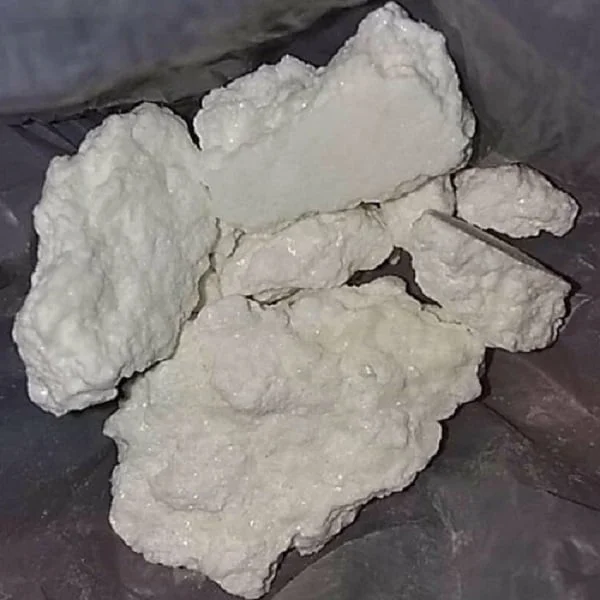
Crack Cocaine is a smokable freebase form of cocaine, a controlled chemical substance studied in forensic toxicology, analytical chemistry, and substance identification research. Unlike cocaine hydrochloride, crack cocaine is generally found in solid, rock-like pieces.
Its chemical identity, composition, and purity require verification using validated laboratory testing methods.
Crack Cocaine – Properties and Quality Analysis
Crack cocaine contains cocaine in its freebase form, with the molecular formula C₁₇H₂₁NO₄.
Laboratory analysis can identify its chemical composition, measure cocaine concentration, and detect other substances present in a sample.
Important analytical characteristics:
- Chemical Identity: Cocaine freebase.
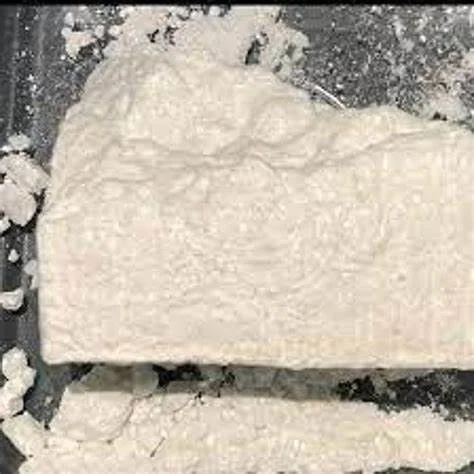
- Physical Form: Solid, irregular rock-like pieces.
- Purity: Requires independent laboratory verification.
- Quality Assessment: Chemical identification and impurity analysis.
- Documentation: Test results should be supported by appropriate laboratory records.
Laboratory Research and Legal Requirements
Crack cocaine may be examined in authorized forensic investigations, toxicological studies, and analytical research.
In the Netherlands, crack cocaine is regulated under the Opiumwet (Dutch Opium Act). Its possession, distribution, and use are subject to strict legal restrictions, with specific provisions for authorized scientific activities.
Frequently Asked Questions (FAQ)
1. What is the difference between crack cocaine and powdered cocaine?
Crack cocaine is generally cocaine in freebase form, whereas powdered cocaine is commonly cocaine hydrochloride. Their chemical forms and physical properties differ, although both contain cocaine.
2. How is crack cocaine identified in laboratory testing?
Qualified forensic laboratories use analytical methods such as gas chromatography-mass spectrometry (GC-MS) and infrared spectroscopy to identify cocaine and examine sample composition.
Additional information
| Qty | 10 grams, 100grams, 200grams, 20grams, 50 grams, 500grams, 5g |
|---|
Related products
-

Cocaine Powder 10 grams
$450.00 Add to cart -
Volkswagen Cocaine
Price range: $5,400.00 through $1,140,000.00 Select options This product has multiple variants. The options may be chosen on the product page -
Bolivian Cocaine
Price range: $430.00 through $25,000.00 Select options This product has multiple variants. The options may be chosen on the product page -
Lavada Cocaine
Price range: $450.00 through $25,000.00 Select options This product has multiple variants. The options may be chosen on the product page
Reviews
There are no reviews yet.